Retro Wall Art for Every Room: Bold Prints That Transform Spaces
Retro Wall Art for Every Room: Bold Pop Art Prints That Transform Spaces
A blank wall is not neutral. It is a missed opportunity. In a home where most surfaces and furnishings are chosen with care, an empty wall communicates that the room is not finished. Retro pop art prints fix this faster than any other design choice — one bold piece anchors a room, establishes its personality, and makes everything else fall into place. This guide covers how to choose, place, and style retro wall art in every room of your home, including the pieces and objects from House of Poco Loco that bring the same energy without requiring a gallery budget.
Why Retro Pop Art Works in Modern Homes
Retro pop art has a paradoxical quality: it feels both of-its-time and timeless. The bold flat colors and graphic lines of 1960s pop art look just as striking on a 2026 wall as they did sixty years ago — because they were designed to be immediate, accessible, and visually arresting rather than subtle or contextually dependent. Unlike many design trends, pop art does not require a specific architectural style or interior period to work. It functions in a minimalist apartment, a family home, a creative studio, and a coastal cottage equally well.
The other advantage: retro pop art sets a clear design direction for a room. Once you have a bold graphic anchor, every other decision — furniture, textiles, smaller objects — becomes easier because you are working toward something rather than assembling pieces at random.
Living Room: The Anchor Wall
The wall behind the sofa is the most important surface in most living rooms — it is what guests see first and what defines the room's character. A large-format retro pop art print here does enormous work. Choose a piece with a strong compositional anchor (a central figure, a face, a bold typographic element) rather than an all-over pattern, which can feel busy at scale.
Sizing guide: Your print should be at least two-thirds the width of your sofa. Most people go too small — a print that fills the wall reads as confident; one that floats in the middle of it reads as tentative.
The object-based alternative: If you are renting or not ready to commit to a large wall piece, bring retro pop art in through objects instead. A bright pop art mug on the coffee table, a graphic tote bag hung on a hook, a set of bold coasters — these create the same aesthetic conversation at a smaller scale. Browse our Limited Edition collection for pieces designed for exactly this.
Kitchen and Dining Room: Color and Character on Functional Surfaces
Kitchens are underrated as art spaces. The objects you use every day — mugs, coasters, tote bags on hooks — are legitimate canvases for bold design, and they bring warmth to a room that can otherwise feel purely functional. A pop art mug on an open shelf, a graphic tote hanging on the pantry door, a set of retro coasters by the kettle — these are small choices that make a kitchen feel lived-in and considered.
For dining rooms, a bold retro print on the wall directly opposite the dining table creates a focal point that anchors the room and gives people something to look at during conversation. Scale to the wall rather than the table.
Bedroom: Restrained Pop Art That Still Has a Voice
Bedrooms work best with pop art at slightly lower intensity — not because the aesthetic does not belong there, but because the room serves rest as well as expression. The formula that works consistently: one bold graphic element, everything else kept calm.
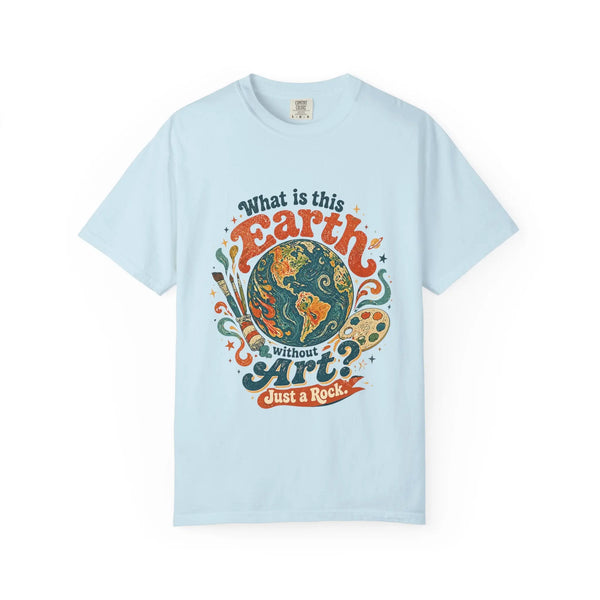
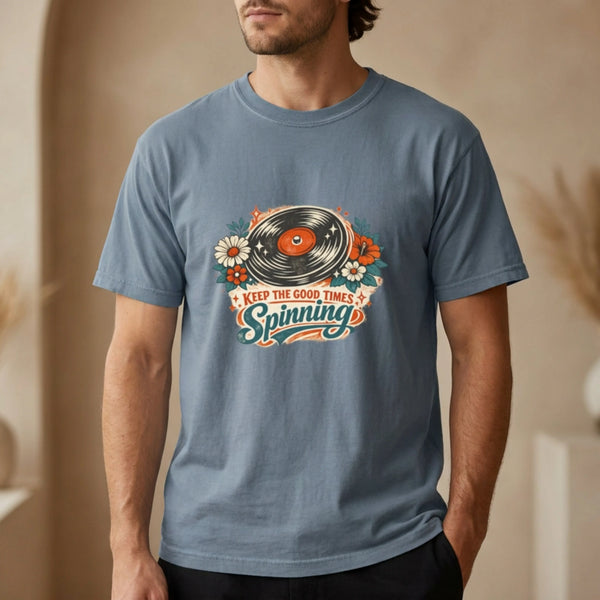
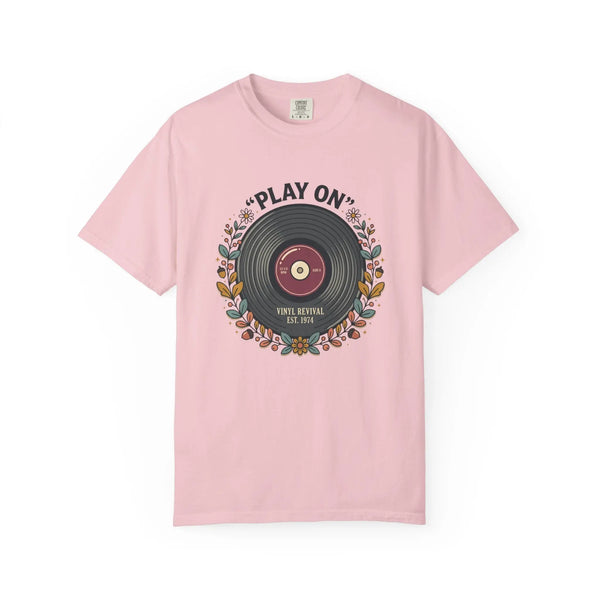
Options that hit the right note in bedrooms: a framed pop art print used in place of a headboard (position it centered above the bed, larger than you think), a graphic cushion in a pop art print against neutral bedding, or a deliberately displayed pop art tee on a clothing rack as both functional storage and wall art. This last option sounds minimal but works — an original graphic tee with strong artwork reads as display-worthy when presented with intention.
Kids' Room: Full Pop Art Energy
The kids' room is the one space where retro pop art can go fully unleashed. Bold colors, character-based graphics, doodle-style illustration — all of it works here and kids respond to it with genuine enthusiasm. The visual language of pop art (bright, graphic, figurative, playful) maps directly onto the kind of art children make and love.
Our Kids Tee Collection — featuring original dinosaur, floral, fruit, and character designs in a scribble-and-doodle style — works double duty in a kids' room: wearable art during the day, display-worthy pieces on a peg rail or clothes hook as room decoration. A pop art tee hung deliberately on a wall hook is a legitimate design choice, not a workaround.
Home Office: Art That Energizes Your Work
The home office has become one of the most important rooms to design well — you spend concentrated, high-stakes hours there, and the environment genuinely affects output. Retro pop art is particularly well-suited to workspace decoration because its energy is activating. Bold graphics, high contrast, strong color — these keep you engaged in a way that a beige wall simply cannot.
Place your boldest piece directly in your sightline — on the wall facing your desk rather than behind you. Position it at eye level when seated, not standing. Add smaller pop art objects at desk level: a graphic mug, a pop art sticker on your laptop, a set of original coasters. Check our Limited Edition collection for desk-compatible pieces.
How to Build a Cohesive Pop Art Interior Without Overdoing It
- One bold piece per room. The anchor rule. Everything else supports it.
- Pull one color from your art piece and repeat it. Echo a color from your print in a cushion, a vase, or a throw to create visual coherence.
- Mix scales. A large wall piece plus small graphic objects (mugs, coasters, totes) creates layering without competition.
- Neutral base, bold accent. White or grey walls let pop art breathe. Heavily colored walls compete with it.
- Let wearable art become display art. A framed pop art tee, a graphic tote on a hook — clothing with strong original design functions as wall art when displayed deliberately.
Frequently Asked Questions — Retro Wall Art and Pop Art Decoration
What size wall art print works best for a living room?
For a sofa wall, aim for at least two-thirds the width of the sofa — most people go too small and the piece floats awkwardly. For a full feature wall, a print that is 80–100cm wide is typically the minimum for impact. Measure your wall before buying, and when in doubt, go larger rather than smaller. A bold piece that owns its space reads as confident; one that is slightly too small reads as tentative.
How do I hang multiple pop art prints without it looking chaotic?
Choose a dominant anchor piece and build symmetrically or organically around it. Keep all frames the same color — all black, all white, or all natural wood. Plan the layout on the floor before committing to wall placement. Leave consistent gaps between frames (5–8cm typically works). The anchor piece should be at eye level; smaller pieces can go above and below.
Can retro wall art work in a modern home?
Yes — retro and contemporary design have been one of the strongest interior combinations for several years. The contrast between a clean modern space and a bold retro pop art piece creates visual tension that makes both elements more interesting. The modern environment lets the retro art breathe; the retro art gives the modern space personality.
How do I stop a pop art print from overwhelming a small room?
One piece only — never more in a small room. Keep walls, furniture, and textiles completely neutral around it. Choose a print with a clear focal point (a central character or element) rather than an all-over busy pattern. Counter-intuitively, a larger single piece often works better in a small room than several small ones, which can feel cluttered.
What is the best way to display pop art in a rental without drilling?
Command strips handle prints up to a certain weight without wall damage — check the weight limits before using. Alternatively, lean large prints against the wall on a shelf, console table, or mantel. Object-based pop art (mugs, tote bags on hooks, coasters, stickers) requires no wall commitment at all. Browse our Limited Edition collection for rental-friendly pieces.
How do I choose between a pop art print and a pop art object for home decoration?
Prints are better as room anchors — they define a space from a distance and establish the room's visual identity. Objects are better as accents and as decoration for rooms where you interact up close: kitchens, home offices, desks. Use prints to set the room's direction; use objects to reinforce it at eye level and arm's length.
Are pop art t-shirts suitable as wall art or room decoration?
Yes — a pop art tee with strong original artwork displayed on a peg rail, clothing rack, or in a frame is a legitimate decorating choice. It brings original art into a space at a fraction of a print's cost, and it doubles as functional clothing storage. Our Pop Art T-Shirts feature artwork strong enough to work as display pieces.
Where can I buy original retro pop art pieces for home decoration in the US and Australia?
House of Poco Loco ships original pop art products to both markets — graphic tees, limited edition objects, mugs, coasters, stickers, greeting cards, and more. Every design is original. Browse the full collection here.
Shop Vintage Collection