Pop Art for Kids — The Bold, Colorful Story Behind the World's Most Fun Art Movement
Pop Art for Kids — The Bold, Colorful Story Behind the World's Most Fun Art Movement
Art history does not have to be boring. Pop art is proof. The story of pop art is a story about artists who got fed up with the art world taking itself too seriously — and decided to make art that was bold, colorful, immediately accessible, and genuinely fun. It is the art movement that put comic books on museum walls, turned a soup can into an icon, and taught the world that art can be for everyone.
This guide is designed to introduce pop art to families — parents who want to share their love of bold design with their children, and children who want to understand where all these incredible graphics come from. From the history to the key artists to how you can bring pop art into your home and wardrobe right now.
What Is Pop Art? (Explained for Families)
Pop art is an art movement that began in the 1950s in Britain and the United States. The name comes from "popular culture" — because pop artists took everyday images from popular culture (advertising, comic books, celebrity photos, product packaging) and turned them into fine art.
Before pop art, the art world mostly valued abstract, serious, and difficult-to-understand work. Pop artists said: what if art was about things people actually see every day? What if a Campbell's soup can was as worthy of artistic attention as a bowl of fruit? What if comic strips were as interesting as classical paintings?
The answer turned out to be: yes. And the art world was never quite the same.
Key pop art characteristics to spot:
- Bold, flat colors — no subtle shading or blending
- Strong black outlines around shapes and figures
- Images from everyday life: food, celebrities, products, comic strips
- Large scale — pop art is made to be noticed from a distance
- Repeated imagery — the same image shown multiple times in different colors
- Text and words as part of the visual design
Where Did Pop Art Come From? (1950s–1960s History, Made Simple)
It started in Britain, 1952. A group of artists in London, including Richard Hamilton and Eduardo Paolozzi, started a group called the Independent Group. They were fascinated by American popular culture — advertising, science fiction magazines, film posters — and wanted to bring that visual energy into fine art.
It exploded in America, 1960s. When pop art crossed the Atlantic to the United States, it found its most famous voices. Andy Warhol's soup cans, Roy Lichtenstein's comic strips, Jasper Johns' American flags — all appearing in galleries in New York at the same time, creating one of the most exciting moments in 20th century art.
Why it was controversial. The art world was genuinely offended. Critics said: this is not art, this is just advertising. Pop artists responded: exactly. And the public responded to the work immediately because they recognised it — it was their world, finally represented in a gallery.
Why it lasted. Pop art's visual language — bold, graphic, immediately readable — is as powerful today as it was in 1962. You see it in graphic design, fashion, advertising, and home decor because it works. Bold is timeless.
Meet the Pop Art Artists Your Kids Will Love
Andy Warhol (1928–1987)
The most famous pop artist in the world. Warhol made art about fame, celebrity, and consumer culture. His most famous works include the Campbell's Soup Cans (32 paintings of soup can labels, displayed in a row) and the Marilyn Diptych (50 repeated images of Marilyn Monroe in different colors). He called his New York studio "The Factory" and filled it with artists, celebrities, and creative energy. Warhol showed that anything — including the most ordinary, everyday object — could be art.
Kid-friendly connection: Ask your child to pick their favourite everyday object — a cereal box, a toy, a favourite food — and imagine it as a giant, boldly colored painting on a gallery wall. That is Warhol thinking.
Roy Lichtenstein (1923–1997)
Lichtenstein turned comic book panels into enormous, gallery-worthy paintings. His signature style: thick black outlines, flat primary colors, and the Ben-Day dot pattern used in commercial printing (you can see it when you look very closely at a newspaper or comic book). His 1963 painting Whaam! showed a fighter jet firing a missile in full comic book drama, blown up to 14 feet wide.
Kid-friendly connection: Bring out a comic book and look at it through a magnifying glass. The Ben-Day dots are right there — and Lichtenstein saw them as beautiful. He also proved that comics, which adults often dismissed as trivial, could be taken seriously as art.
Keith Haring (1958–1990)
Haring began making art in the New York subway — drawing chalk figures on unused advertising panels in subway stations. His instantly recognisable style: bold, simple figures in perpetual motion, without faces, outlined in thick black and filled with flat color. He made murals in schools, hospitals, and community centers around the world. He believed art should be free, public, and for everyone — especially children.
Kid-friendly connection: Haring's figures are so simple that children can draw them. Try it — draw a stick figure in motion, outline it boldly, fill with a bright color. That is the beginning of Haring's visual language. His art invites participation in a way that feels genuinely accessible.
How to Spot Pop Art (Fun Spotting Guide for Kids)
Pop art is everywhere once you know what to look for. Here is a guide to spotting it in the wild:
- Bold outlines: Strong black lines around every shape — like a cartoon or comic book. If an image has those outlines, it might be influenced by pop art.
- Flat color: No gradients, no subtle shading. Just bright, flat areas of pure color. Pop art does not blend — it declares.
- Repeated imagery: The same image shown multiple times, often in different color combinations. Warhol made this his signature.
- Everyday subjects: Food packaging, celebrities, product logos, comic strips. If fine art is using images you'd normally see in a supermarket or a newspaper, that's the pop art influence.
- Big and bold: Pop art wants to be seen. It doesn't whisper — it shouts in primary colors from across the room.
Bring Pop Art Home — Little Poco Loco Kids' Art Picks
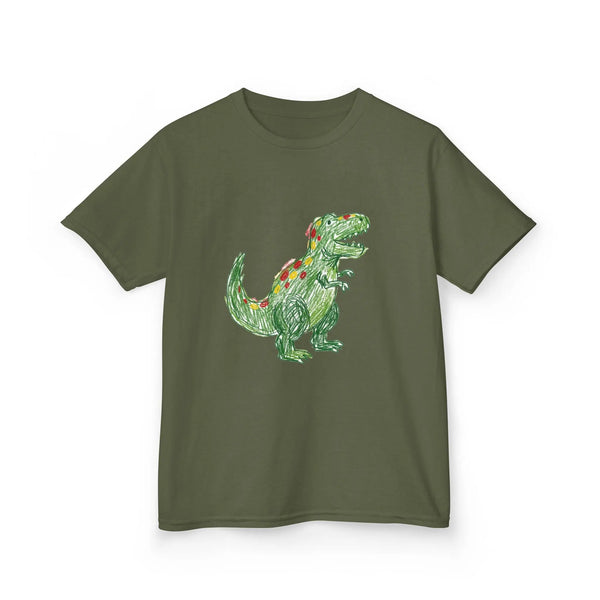
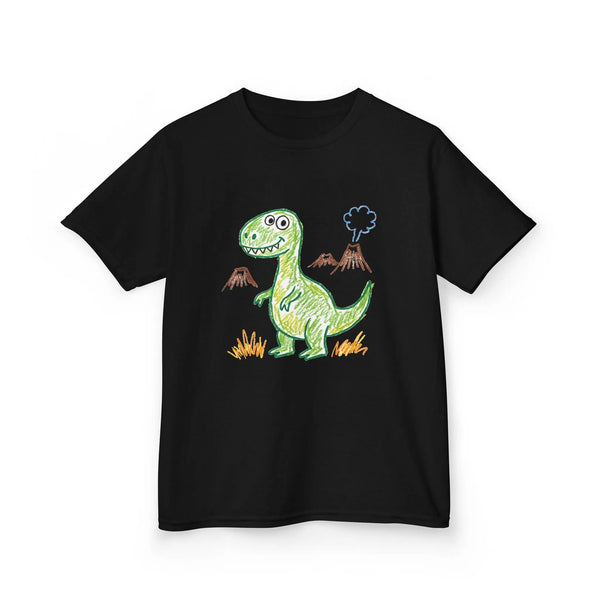
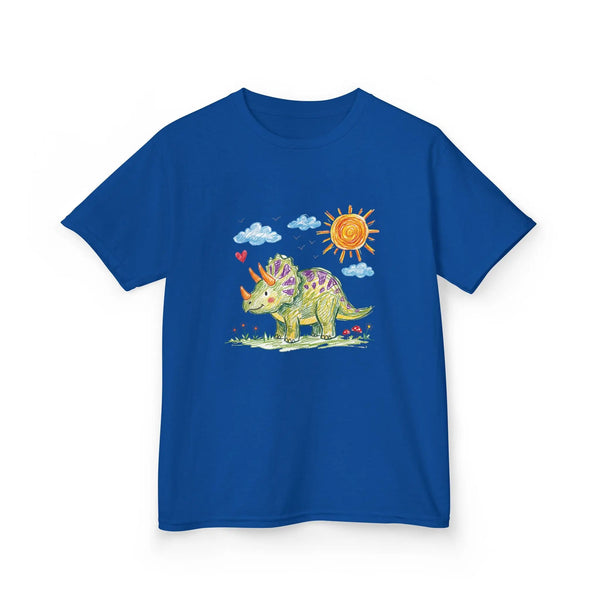
The best introduction to pop art for children is wearing it and living with it. Our Little Poco Loco Kids Collection brings the pop art visual language into wearable form — bold outlines, primary colors, original character designs in the scribble-and-doodle tradition that shares DNA with Haring's accessible line art.
For parents who want to share the adult pop art tradition with their children, our Pop Art T-Shirts wear the aesthetic on your sleeve — literally. A parent in a bold pop art graphic tee alongside a child in a Little Poco Loco design is a family that understands where bold design comes from and brings it into everyday life.
For home decoration, bold pop art prints at both adult and kids' eye level in a shared family space communicate exactly the message that pop art always has: art is not separate from life. It belongs in the supermarket, the subway, the bedroom, and on the tee your toddler wears to the playground.
Frequently Asked Questions — Pop Art History for Kids and Families
What age can children start appreciating pop art?
Even very young children (18 months and up) respond to the bold colors and clear graphic shapes of pop art. Toddlers are drawn to primary colors and strong contrasts — which are the defining characteristics of the pop art aesthetic. More complex understanding of the art movement's cultural context develops around ages 6–10, but the visual engagement starts from the very beginning.
How do I explain Andy Warhol to a child?
Tell them about the soup can — and ask them what their favorite food is. "Andy Warhol painted Campbell's Soup Cans because he loved soup and he thought everyday things deserved to be beautiful. He painted the same soup can 32 different ways and put them all in a famous gallery. What would you paint 32 different ways?" This makes the concept immediate and personal rather than abstract.
What pop art activities can I do with my children?
Try a Warhol-inspired repeated portrait — take a photo of your child's face, print it four times, and color each one in different bold primary colors. Try Haring's dancing figures — simple, fast, accessible for all ages. Make a Ben-Day dot drawing using a pencil eraser dipped in paint to make rows of perfect circles. All three activities produce results that genuinely look like pop art because the technique is the art.
Are there pop art books for children?
Yes — look for children's art history books specifically about Andy Warhol and Keith Haring, both of whom are covered in accessible formats designed for younger readers. "Keith Haring: The Boy Who Just Kept Drawing" is particularly well-suited for children aged 4–8. For older children, the MoMA and Tate Modern both have educational resources about pop art available online and in their bookshops.
Why is Keith Haring particularly good for children?
Haring's work is accessible to children for several reasons: his figures are simple enough that children can draw them immediately, his colors are bold and joyful, his themes (love, movement, community) are universally understandable, and his message — that art belongs to everyone, in public spaces, for free — is one that children respond to intuitively. His legacy includes enormous public murals on school and hospital walls, created specifically for the communities around them.
How do pop art principles apply to everyday family life?
Pop art's core principle — that everyday objects and popular culture are worthy of artistic attention — applies directly to family life. The bold graphic tee your toddler wears, the mug you drink from every morning, the sticker on your water bottle — these are all expressions of the same aesthetic democracy that pop art championed. Art does not live only in galleries. It lives in families.
What is the best pop art piece for a child's bedroom?
A bold primary-color print with a character or figure at child eye level (42–48 inches from the floor) — something that speaks the visual language of pop art without being adult-coded. Our Little Poco Loco Kids Collection features designs in this tradition. A graphic tee hung deliberately on a wall hook is also a legitimate choice — wearable art displayed as room decoration.
Where can I explore pop art with my family in the US and Australia?
The Museum of Modern Art (MoMA) in New York has one of the best pop art collections in the world, including Warhol's Campbell's Soup Cans. The Art Gallery of New South Wales in Sydney and the National Gallery of Victoria in Melbourne both have significant modern art holdings including pop art works. Online, the Tate Modern (London) and MoMA both have excellent free educational resources about pop art accessible to families anywhere.
Shop Family Matching Tees